
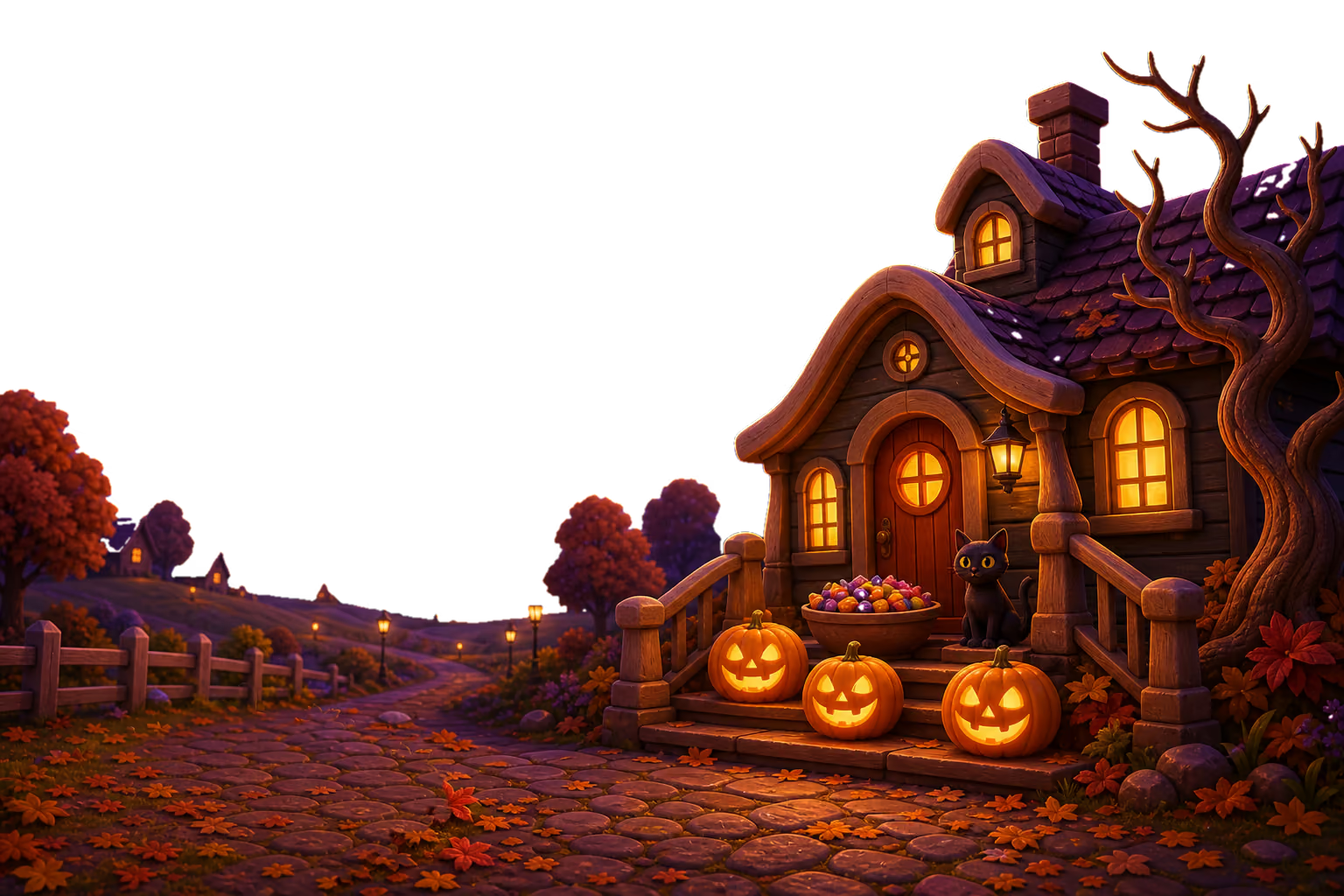



Jack-o'-lanterns
Carved turnips, potatoes and beets came first. Irish immigrants in the mid-1800s switched to pumpkins, which are native to the Americas and much easier to carve.
Source: britannica.com
Halloween 2027
Something small is hiding in the dark.
Jack-o'-lanterns, a big moon, bats on the wind and tiny visitors who are terrible at hiding.
A tiny world · made in Blender
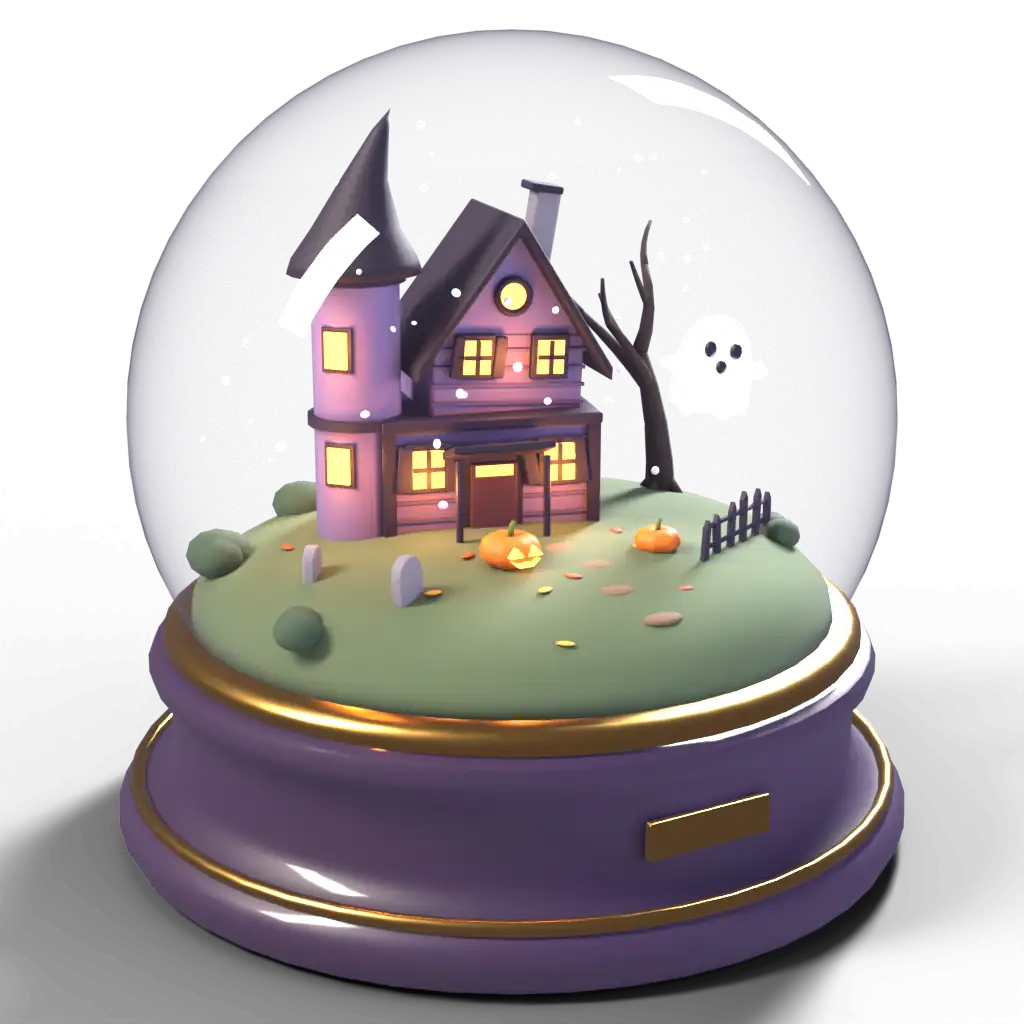
Snow globe
A crooked purple house, two pumpkins and one very friendly ghost. Shake up a spooky-sparkly flurry.
Step inside to turn it and shake it.
The story
Halloween's roots are old and a little tangled. In Ireland and Britain, Celtic peoples celebrated Samhain around November 1, marking the end of the harvest and the start of winter — a time when the boundary between the living and the spirit world was believed to grow thin. Many people trace Halloween back to Samhain, though scholars debate how direct that link really is, and medieval Christian feasts for the dead shaped it too. The church placed All Saints' Day on November 1, and the evening before became All Hallows' Eve: Halloween.
The first jack-o'-lanterns weren't pumpkins. In Ireland and Scotland people carved faces into turnips and potatoes (and in England, big beets) and set them by doors and windows. An Irish tale says they were named for Stingy Jack, who tricked the Devil and was left to wander the night with a coal inside a hollow turnip. When Irish families came to America in the 1800s, they found pumpkins — native to the Americas and much easier to carve.
Knocking on doors is old, too. In Scotland and Ireland, children in disguise went “guising,” trading a song or a poem for a treat, and in “souling” poor people offered prayers for the dead in exchange for soul cakes. The words “trick or treat” turned up in the 1920s, and the custom really took off in the United States after World War II, once sugar rationing ended. Folklorists at the Library of Congress point out there's no direct evidence that souling became trick-or-treating — Thanksgiving-time masking may be the closer ancestor.
Sources: britannica.com: Halloween, britannica.com: why do we carve pumpkins at halloween, britannica.com: jack o lantern decoration, gardens.si.edu, britannica.com: History of Trick or Treating, smithsonianmag.com, blogs.loc.gov
Before pumpkins, Irish and Scottish jack-o'-lanterns were carved from turnips and potatoes; English ones from large beets.
Source: britannica.com
Pumpkins are native to the Americas — Irish immigrants found them far easier to carve than turnips.
Source: britannica.com
The Stingy Jack legend first appeared in print in the 19th century.
Source: britannica.com
Pumpkin carving in the United States dates to the mid-1800s.
Source: gardens.si.edu
“Halloween” comes from “All Hallows' Eve” — the evening before All Saints' Day on November 1.
Source: britannica.com
Library of Congress folklorists say there's no direct evidence that souling led to American trick-or-treating; Thanksgiving-time masking may be the closer ancestor.
Source: blogs.loc.gov
Carved turnips, potatoes and beets came first. Irish immigrants in the mid-1800s switched to pumpkins, which are native to the Americas and much easier to carve.
Source: britannica.com
On Samhain night, it is said, people wore masks and disguises to blend in with the spirits thought to be roaming about.
Source: britannica.com
In Scotland and Ireland, disguised children went door to door performing songs or poems for treats. In “souling,” poor people offered prayers for the dead in exchange for soul cakes.
Source: britannica.com
The phrase “trick or treat” appeared in the 1920s, and the custom took off across the United States after World War II, when sugar rationing ended.
Source: smithsonianmag.com
Sweep a flashlight through a dark, cozy house and find the tiny visitors hiding inside.
Carve a jack-o'-lantern (or an old-style turnip), light the candle and set it on your porch.
Tiny Blender-made worlds under glass. Turn them, shake them, watch the snow settle.
Its own celebration, with its own stories and sky, sharing the Halloween season.
In 344 daysNov 1 – Nov 2
Its own observance, from Mexico: families lovingly welcome back the souls of relatives who have died, with ofrendas, marigolds and candles. ich.unesco.org
Take it home · Make it in your photo
2 free creations to start · Then use credits · Browsing is always free
THE MISCHIEF MENU
Every episode is always here.
No FOMO. Just funny little guys.
3 episodes · Save your favorites on this browser


