Skip to contentinstaelfie

Kwanzaa 2026–27 · seven days

Kwanzaa

Seven days, seven principles, seven candles.

A celebration of African American family, community and culture, with a principle of the Nguzo Saba for each day.

Celebrated alongside Christmas

In 34 daysDec 26 – Jan 1Both games ready

A tiny world · made in Blender

Light the kinara, day by day

Arrow keys turn the view.

Diorama

Kinara

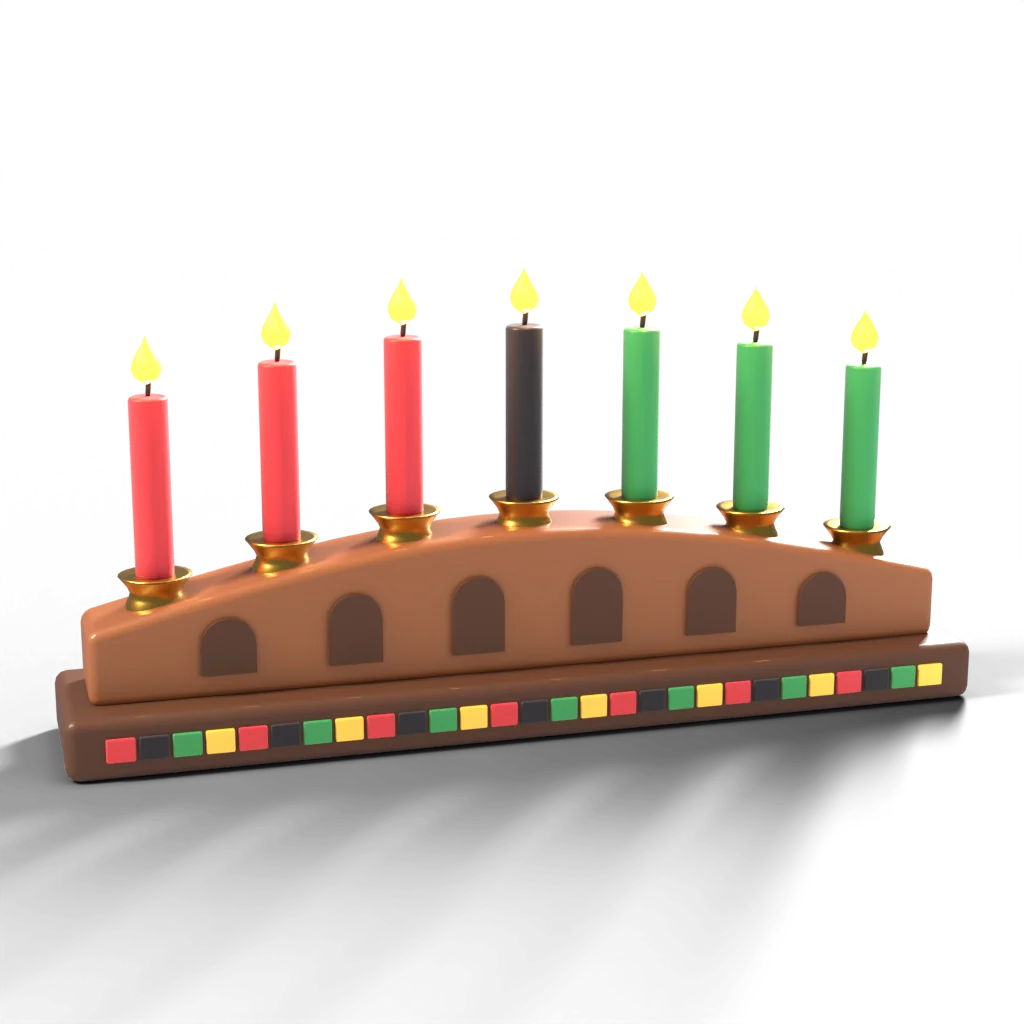
Seven candles: one black in the centre, three red on its left, three green on its right.

Black is for the people, red for their struggle, green for the future and hope that comes from their struggle. officialkwanzaawebsite.org

Step inside to turn it.

The story

Inside Kwanzaa

Kwanzaa is an African American and Pan-African celebration of family, community and culture. It was created in 1966 by Dr. Maulana Karenga, and its name comes from the Swahili phrase 'matunda ya kwanza' — 'first fruits'. Like harvest festivals across Africa, it is a time to gather, give thanks, remember the ancestors and look ahead with hope.

For seven days, from December 26 to January 1, families light one more candle on the kinara and talk about one of seven principles, the Nguzo Saba: unity, self-determination, collective work and responsibility, cooperative economics, purpose, creativity and faith. On December 31 there is a big feast called the karamu.


Sources: britannica.com, officialkwanzaawebsite.org: the celebration, officialkwanzaawebsite.org: faq, nmaahc.si.edu

  • Kwanzaa was created in 1966; it is not an ancient holiday, though it draws on African first-fruits harvest traditions.

    Source: britannica.com

  • Karenga added an extra 'a' to the Swahili word 'kwanza' so the name would have seven letters — one for each of seven children at an early celebration.

    Source: britannica.com

  • Kwanzaa is cultural, not religious, and is not meant to replace Christmas; people of many faiths celebrate it.

    Source: britannica.com

  • There are seven principles, seven candles, seven days and seven basic symbols (mazao, mkeka, kinara, mishumaa saba, muhindi, zawadi and kikombe cha umoja), plus two supplemental ones.

    Source: officialkwanzaawebsite.org

  • The kikombe cha umoja (unity cup) is 'symbolic of the foundational principle and practice of unity which makes all else possible'.

    Source: officialkwanzaawebsite.org

  • Its founder describes Kwanzaa as both an African American and a Pan-African holiday, celebrated by millions of Africans throughout the world African community.

    Source: officialkwanzaawebsite.org

  • Kwanzaa always runs December 26 to January 1, so it crosses into the new year.

    Source: officialkwanzaawebsite.org

Traditions

The Nguzo Saba, day by day

Each day has its principle: Umoja (unity) on Dec 26, Kujichagulia (self-determination) on Dec 27, Ujima (collective work and responsibility) on Dec 28, Ujamaa (cooperative economics) on Dec 29, Nia (purpose) on Dec 30, Kuumba (creativity) on Dec 31 and Imani (faith) on Jan 1.

Source: nmaahc.si.edu

The kinara and seven candles

Seven candles (mishumaa saba) stand in the kinara: one black in the center for the people, three red on its left for their struggle, and three green on its right for the future and hope that come from their struggle. On the first day, Umoja, the black candle is lit, and the official Kwanzaa website describes lighting the others from left to right on the days that follow.

Source: officialkwanzaawebsite.org

Lighting the kinara

One more candle is lit each day: a red one for Kujichagulia, Ujamaa and Kuumba, a green one for Ujima, Nia and Imani. Sources describe different orders: Britannica Kids describes the candles being lit alternating outward from the black one, while the official Kwanzaa website describes left to right.

Source: kids.britannica.com

The mkeka (mat)

The mat is symbolic of tradition and history, 'the foundation on which we build'. The other symbols are placed on the mkeka.

Source: officialkwanzaawebsite.org

Mazao and muhindi

Mazao (crops: fruits, vegetables, nuts) honor harvest celebrations and the rewards of shared work. Muhindi (ears of corn) represent the children of the family and community.

Source: officialkwanzaawebsite.org

Kikombe cha umoja

The unity cup is used to pour libation in honor of the ancestors, and family members drink from it to strengthen unity.

Source: kids.britannica.com

The bendera (flag)

The Kwanzaa flag carries the same three colors as the candles, black, red and green, with the same meanings.

Source: officialkwanzaawebsite.org

Karamu

On December 31, families and friends come together for a communal feast called the karamu.

Source: britannica.com

Zawadi (gifts)

Gifts reflect the labor and love of parents and the commitments made and kept by children.

Source: officialkwanzaawebsite.org

Play & learn

The whole arcade

Puzzle~3 min

Seven Principles

Set out the seven symbols, set the kinara, match the Nguzo Saba to their days and light it day by day.

Puzzle~5 min

Mkeka Weaving

Weave a mkeka mat strip by strip, then set the seven symbols of Kwanzaa upon it.