



Diyas
Small clay oil lamps are lined up in homes and temples, welcoming Lakshmi and, in the Ramayana story, lighting Rama's way home to Ayodhya.
Source: britannica.com
Diwali 2027 · Oct 29 in India, Oct 28 in the US
Rows of lamps light a dark new-moon night.
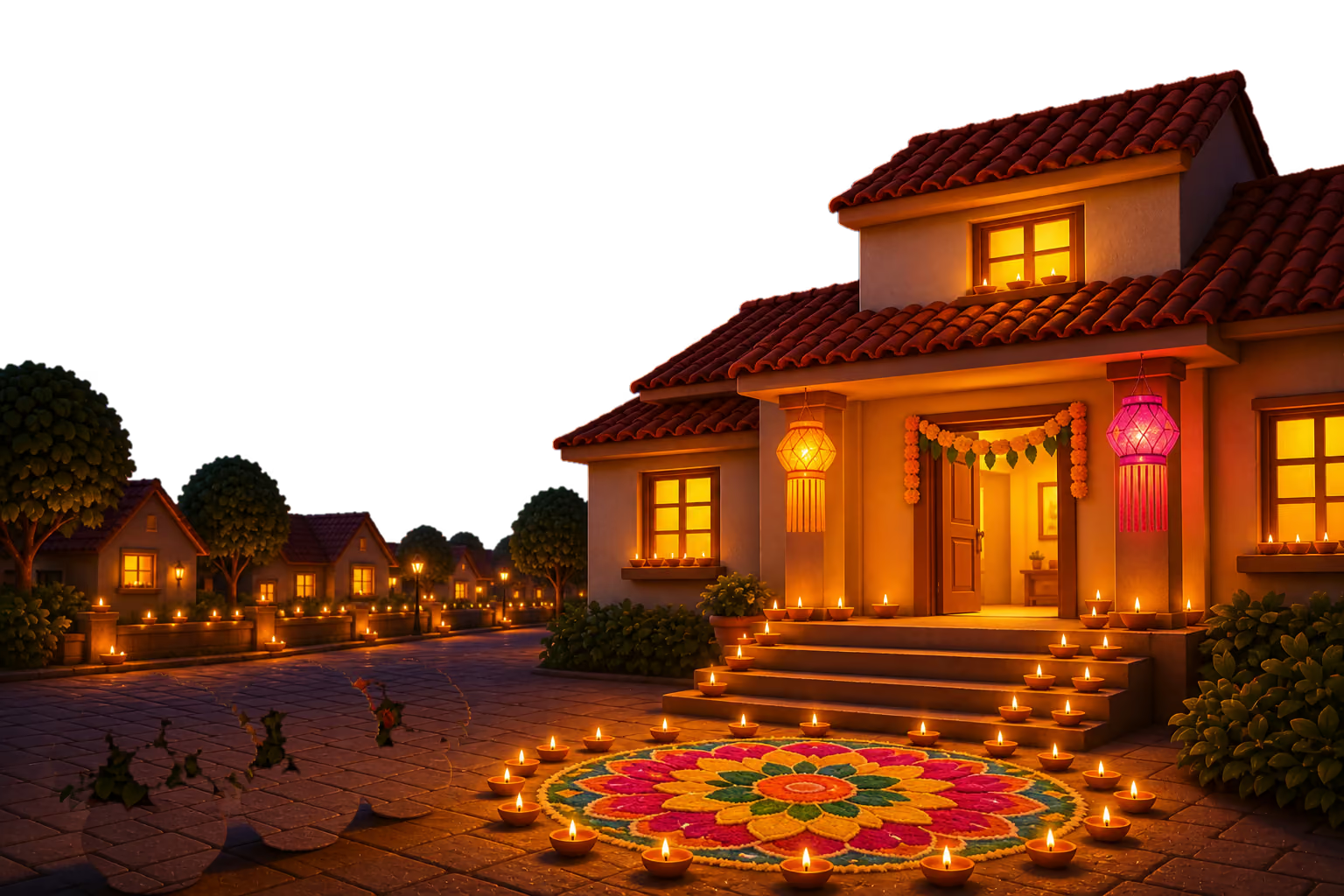
The festival of lights: diyas in every window, rangoli at the door and sweets shared with neighbors.
Celebrated alongside Thanksgiving
A tiny world · made in Blender
Diorama
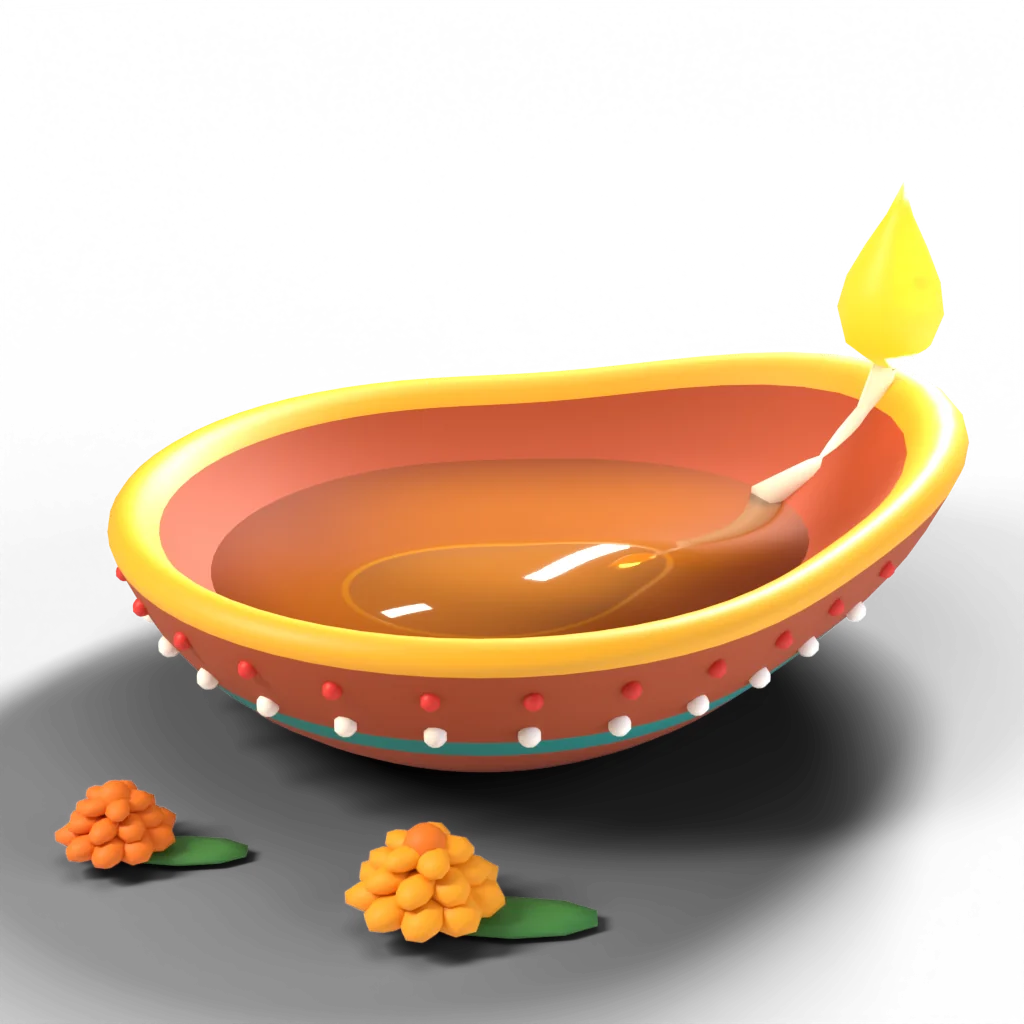
A little painted clay oil lamp, set beside two marigolds. Its flame never stops dancing.
At Diwali, small clay oil lamps are lined up in homes and temples, welcoming Lakshmi and, in the Ramayana story, lighting Rama’s way home to Ayodhya. britannica.com
Step inside to turn it.
The story
Diwali — from the Sanskrit 'dipavali', meaning 'row of lights' — is the festival of lights. On the new-moon night of the Hindu month of Kartika (October–November), homes and temples glow with rows of little clay oil lamps called diyas.
For many Hindus in northern India, Diwali celebrates Lord Rama coming home to Ayodhya after defeating the demon king Ravana, when the people lit lamps to welcome him. In southern India, many celebrate Lord Krishna's victory over the demon Narakasura. Everywhere, families clean and decorate their homes and welcome Lakshmi, the goddess of good fortune.
Diwali is shared by several faiths, each with its own meaning. Jains remember the day Lord Mahavira reached nirvana. Sikhs celebrate Bandi Chhor Divas, the release of Guru Hargobind from imprisonment in 1619. Among the Newar people of Nepal, Buddhists mark the day Emperor Ashoka embraced Buddhism.
The festival spans about five days, from Dhanteras to Bhai Dooj. People light lamps, draw colorful rangoli at their doors, share sweets and visit family — light winning over darkness.
Sources: britannica.com: How is Diwali celebrated, britannica.com: diya, hinduamerican.org: 5 things to know about diwali, hinduamerican.org: diwali, britannica.com: Festivals, pluralism.org, drikpanchang.com
'Diwali' comes from the Sanskrit 'dipavali', meaning 'row of lights'.
Source: britannica.com
Diwali 2026 falls on Sunday, November 8 (Lakshmi Puja); the five days run from about November 6 (Dhanteras) to November 10–11 (Bhai Dooj).
Source: drikpanchang.com
The main day falls on the new-moon (Amavasya) night of the month of Kartika — a dark night lit by lamps.
Source: drikpanchang.com
Because the new moon can straddle two dates, Diwali 2027 is October 29 in India but October 28 in the US.
Source: drikpanchang.com
Sikhs' Bandi Chhor Divas recalls Guru Hargobind's release from Mughal imprisonment in 1619.
Source: britannica.com
The lotus, a favorite rangoli motif, is linked with Lakshmi — called 'she of the lotus' — and stands for purity and beauty.
Source: hinduamerican.org
Rangoli made of rice flour is eaten by birds and ants, so the design slowly disappears — a reminder that everything changes.
Source: britannica.com
In South India, rangoli-like kolam and muggu designs are mostly white, drawn with rice flour or sometimes chalk.
Source: britannica.com
Small clay oil lamps are lined up in homes and temples, welcoming Lakshmi and, in the Ramayana story, lighting Rama's way home to Ayodhya.
Source: britannica.com
Colorful designs of powders, rice flour or flower petals are drawn at doorways to welcome good fortune and guests. In South India, kolam and muggu designs are mostly white, drawn with rice flour or chalk.
Source: britannica.com
The first day is considered auspicious for buying valuables such as metal utensils, as part of welcoming Lakshmi.
Source: hinduamerican.org
On the main night, families perform puja (worship) to Lakshmi, goddess of prosperity, after cleaning and decorating their homes.
Source: hinduamerican.org
Families share sweets and gifts with relatives and neighbors; on Govardhan Puja some build a 'mountain' of food to honor Krishna lifting Govardhan Hill.
Source: hinduamerican.org
On the last day, sisters honor their brothers, offering sweets and prayers for their well-being.
Source: hinduamerican.org
Draw with radial symmetry, weave a kolam around dots, then light the diyas.
Light every diya on nine rangoli boards. Each tap flips a lamp and the lamps joined to it.
